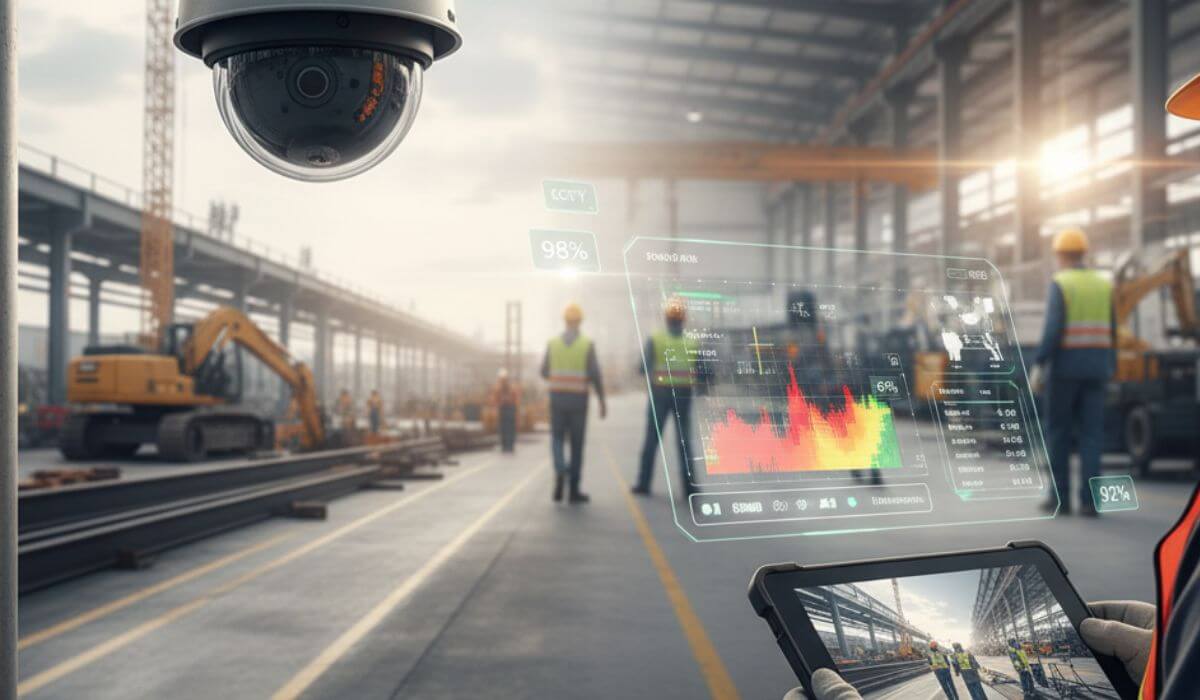



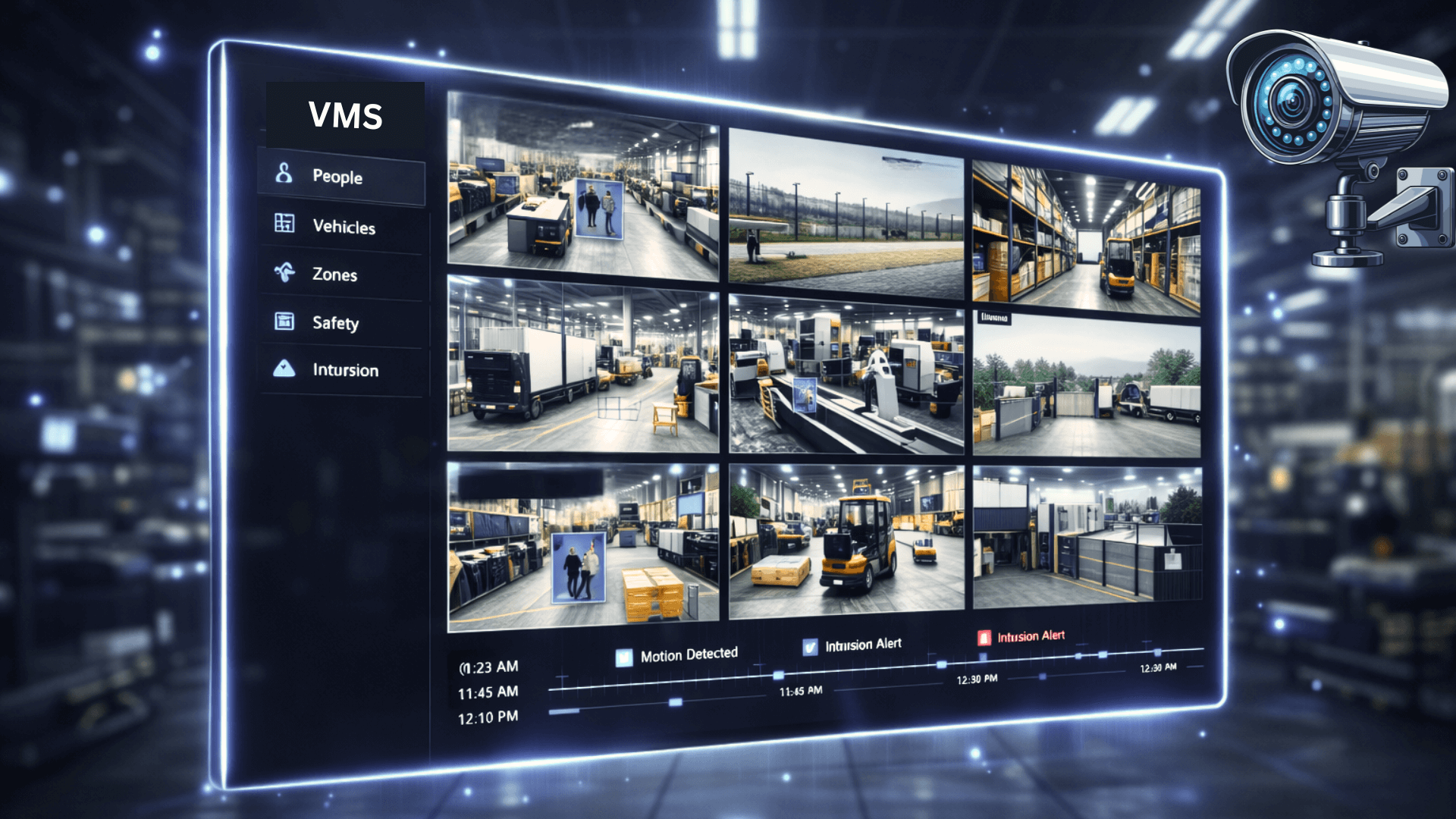
In this article, we explore why VMS is essential for modern CCTV systems, how it has evolved, and how AI-powered video analytics dramatically increases the power of VMS—transforming video from passive recordings into real-time, actionable intelligence.
Key Takeaways
- CCTV cameras provide visibility; Video Management Software determines how that visibility becomes genuinely useful for safety, security, and operations.
- Modern VMS platforms extend far beyond basic recording and playback to support sophisticated event detection, automated alerts, and real-time actionable insights.
- Integrating intelligent analytics dramatically reduces manual monitoring requirements, enables proactive prevention strategies, accelerates response times, and strengthens compliance efforts.
- A single well-designed VMS can serve multiple organizational functions—safety, security, operations, compliance, and IT—when combined with centralized dashboards and role-based access controls.
- Industries such as manufacturing, construction, logistics, retail, banking, and educational campuses increasingly rely on VMS combined with analytics for scalable, audit-ready surveillance solutions.
What is a Video Management System (VMS)?
A Video Management System (VMS) is specialized software that manages, monitors, stores, and organizes video feeds from CCTV cameras in a centralized, streamlined manner. At its core, a VMS enables organizations to:
- Connect and configure cameras across multiple locations
- View live video from multiple cameras simultaneously
- Record and securely store footage according to policy
- Search and replay recordings efficiently
- Control user access through roles and permissions
- Maintain comprehensive logs and audit trails of all video-related events
In essence, cameras capture video; VMS organizes it intelligently. For enterprises managing dozens or even hundreds of cameras, VMS provides the essential control layer that standardizes recording policies, centralizes access points, and gives teams a single, unified interface to work from. However, traditional VMS was designed primarily for visibility and control, not interpretation—it shows what happened, but not necessarily what it means or why it matters.
Which Software Layers Are Involved in CCTV Systems?
A robust, enterprise-grade CCTV deployment typically involves several distinct software layers:
Camera-level software — basic vendor-provided tools for single-camera configuration and viewing; these offer limited scalability for larger deployments.
DVR/NVR software — local recording devices that handle storage and playback; these are typically focused on recording functions rather than generating intelligence.
Video Management Software (VMS) — centralizes video streams, user management, storage policies, and system integrations across the entire infrastructure.
Analytics/Intelligence platforms — consume video feeds (often via VMS integration), apply computer vision and AI algorithms to detect events, identify patterns, and flag anomalies automatically.
Understanding the distinction between these layers matters significantly: VMS is not analytics, and analytics is not VMS. However, when integrated together, they form a complete, intelligent CCTV ecosystem that delivers far more value than either component alone.
How VMS Works in an Enterprise CCTV Setup
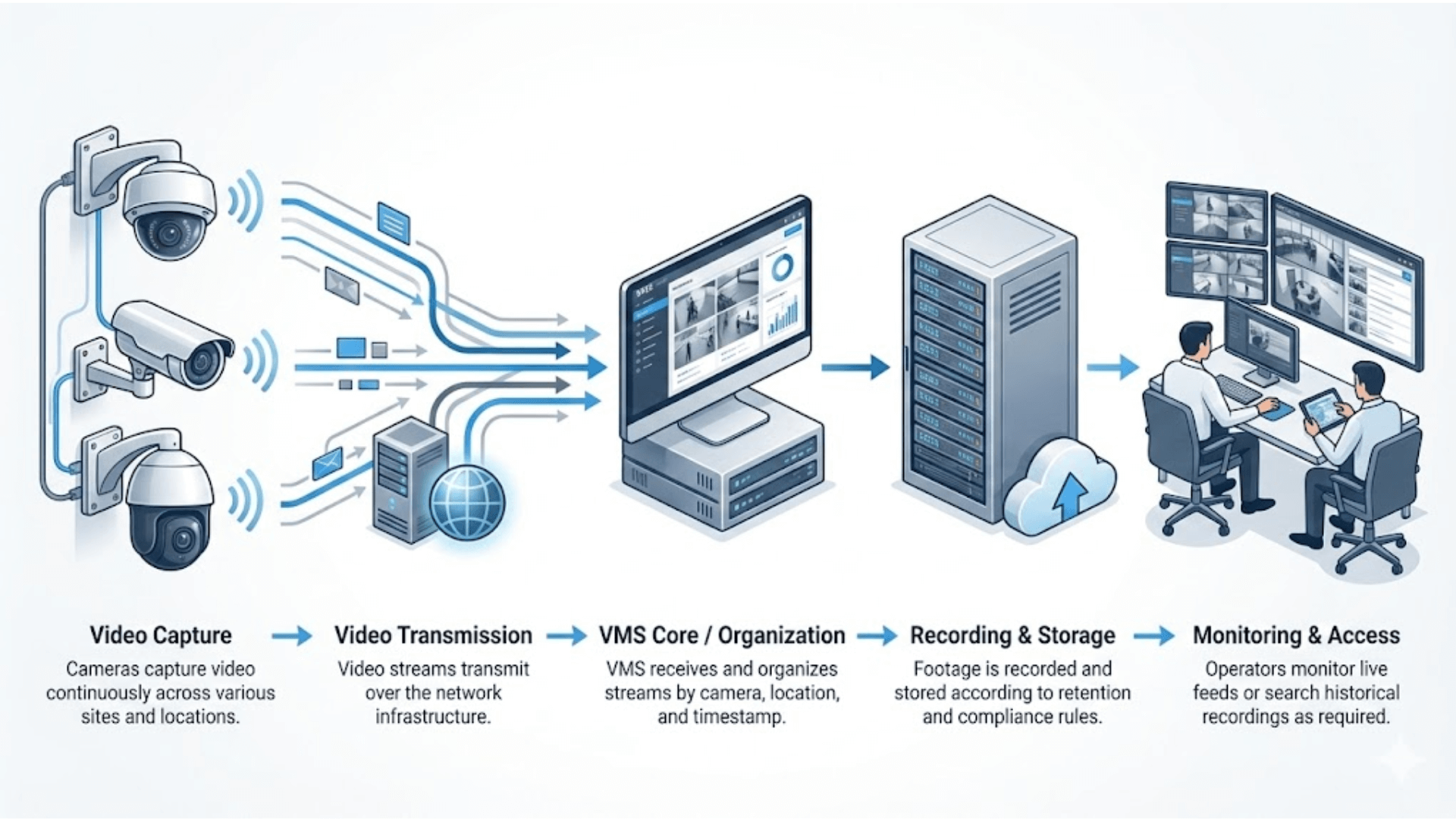
The typical workflow operates as follows:
- CCTV captures video continuously across various sites and locations
- Video streams are transmitted over the network infrastructure
- VMS receives and organizes streams by camera, location, and timestamp
- Footage is recorded and stored according to retention and compliance rules
- Operators monitor live feeds or search historical recordings as required
This workflow functions adequately—until scale creates a significant human bottleneck. As CCTV camera counts grow exponentially, expecting operators to watch an ever-increasing number of screens simultaneously becomes completely unsustainable. Important moments are inevitably missed, alerts are delayed, and systems become reactive rather than preventive in nature.
The Evolution of VMS: From Passive Monitoring to Intelligent Systems
Early VMS platforms focused almost exclusively on record-and-replay functionality for post-incident investigation. Their limitations quickly became obvious in real-world deployments:
- Human operators simply can't reliably monitor dozens of video feeds continuously
- Incidents are often detected only after harm has already occurred
- Compliance problems typically surface late in the process, during formal audits
- Valuable operational insights remain hidden in terabytes of unused footage
To address these fundamental limitations, VMS has evolved significantly to incorporate or integrate seamlessly with intelligence layers: AI and computer vision technologies that automatically analyze video, detect predefined conditions, and raise alerts in real time. Intelligent systems fundamentally shift CCTV from a passive archive into an active sensor network that helps prevent incidents before they escalate.
Core Intelligent Capabilities That Extend VMS
When intelligence is strategically layered on top of VMS infrastructure, CCTV becomes exponentially more useful:
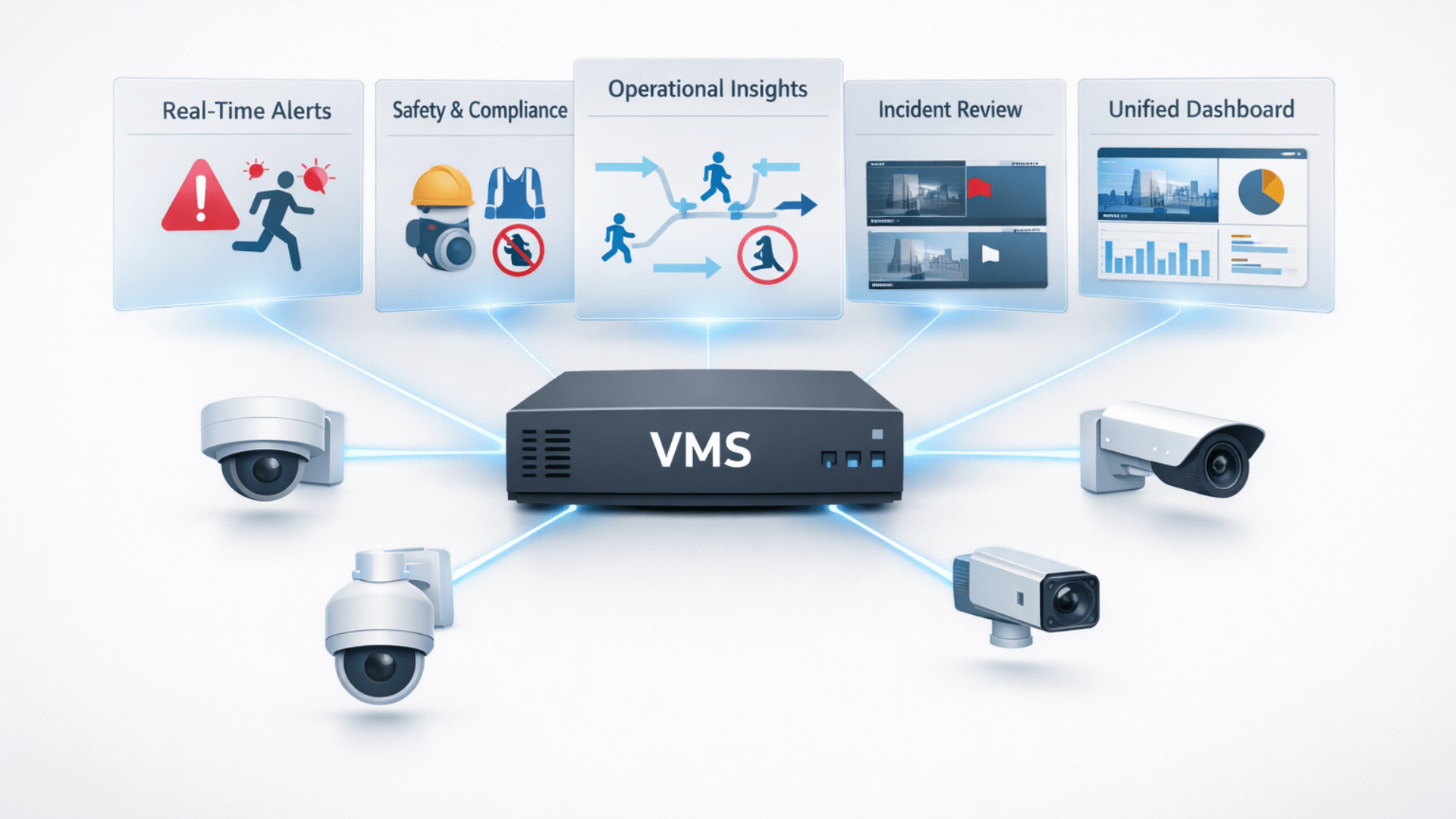
Real-time event detection — automated detection of specific events with instant alerts to appropriate personnel.
Safety & compliance monitoring — continuous monitoring for missing PPE, restricted-zone breaches, unsafe behaviors, and regulatory violations.
Operational visibility — analysis of movement patterns, congestion points, idle time, product flow, and process efficiency.
Faster incident review — relevant clips automatically flagged and categorized for quick investigation, dramatically reducing review time.
Unified dashboards — live video feeds, alerts, analytics, and historical data consolidated in one accessible interface.
These powerful capabilities extend and enhance the VMS rather than replacing it, protecting existing infrastructure investments while adding transformative intelligence.
Why Traditional CCTV Falls Short Without Intelligence
Organizations relying solely on traditional CCTV face common, recurring challenges:
- Manual monitoring simply does not scale beyond a handful of cameras
- Incidents are discovered too late to prevent damage or injury
- Video footage is significantly underused by operations and safety teams
- Reviewing footage manually is extremely time-consuming and often delivers low value
- Critical patterns and trends remain invisible without analytical tools
Without analytics, CCTV systems capture everything but explain very little, turning potentially valuable data into overwhelming noise.
How Modern VMS Supports Safety, Compliance, and Operations
Different organizational roles utilize VMS in distinct, complementary ways:
Safety officers rely on real-time alerts to prevent incidents proactively and enforce PPE compliance consistently across sites.
Operations heads use analytical dashboards to identify bottlenecks, optimize throughput, and improve overall process efficiency.
Compliance officers need timestamped logs and video evidence readily available for regulatory audits and investigations.
IT managers maintain system integrations, access controls, cybersecurity measures, and overall system health.
An integration-first modernization strategy allows organizations to upgrade capabilities significantly without replacing existing cameras, infrastructure, or core systems—protecting past investments while enabling future innovation.
Industry Use Cases
Manufacturing: PPE compliance monitoring, automated product counting, hazard detection, and quality control verification.
Construction: Dynamic site oversight, unsafe behavior detection, restricted area monitoring, and access control.
Retail: Occupancy monitoring, customer flow analysis, queue management, loss prevention.
Banking & offices: Secure access control, queue monitoring, customer service optimization, secure operations monitoring.
Smart cities & infrastructure: Traffic monitoring, overspeed detection, incident alerts, public safety management when VMS is paired with advanced analytics.
Across all these diverse industries, the fundamental goal remains consistent: move decisively from passive observation to proactive action.
What to Look for in a Modern VMS Strategy
When evaluating VMS and analytics solutions, organizations should prioritize long-term strategic value:
- Compatibility with existing camera brands, models, and protocols
- Native support for analytics or easy integration with analytics platforms
- Hybrid edge + cloud architecture for low latency and unlimited scale
- Real-time alerts and customizable notifications
- Centralized dashboards and comprehensive reporting capabilities
- Secure APIs and granular role-based access control
- Ability to customize AI models for industry-specific needs and workflows
- Vendor stability and commitment to ongoing innovation
A future-ready strategy protects current infrastructure investments while enabling continuous improvements in intelligence over time.
NWarch AI — Intelligence That Integrates Seamlessly With Your VMS
NWarch AI is specifically designed to enhance, not replace, traditional VMS platforms. It integrates smoothly with existing VMS infrastructure and consumes the same live camera feeds to add sophisticated real-time intelligence—without requiring new hardware installations or camera replacements.
While the VMS continues managing cameras, recordings, and playback functions as before, NWarch AI focuses specifically on understanding what's actually happening in the video. Typical capabilities include:
- Comprehensive safety and PPE compliance monitoring
- Accurate people and product counting
- Automated alerts for critical events and anomalies
- Edge-capable processing for ultra-low-latency detection
- Industry-tuned AI models to dramatically reduce false alerts
- Customizable rules and thresholds for specific operational needs
This thoughtful, layered approach enables organizations to upgrade their CCTV infrastructure from basic monitoring to proactive, insight-driven operations—without requiring changes to cameras, network infrastructure, or well-established workflows that teams already understand.
Conclusion
CCTV cameras alone are no longer the differentiator in modern security and operations—how effectively video is managed, analyzed, and acted upon determines actual business value. Video Management Software remains the essential foundation of contemporary surveillance systems, but intelligence is what transforms recorded footage into proactive safety improvements, enhanced security, and measurable operational value.
Intelligent VMS ecosystems—combining a robust VMS with an analytics layer such as NWarch AI—enable organizations to move decisively beyond passive monitoring toward truly data-driven decision making. For enterprises currently modernizing CCTV infrastructure, investing in the right VMS strategy paired with an integration-first analytics platform isn't merely beneficial—it's strategically essential for competitive operations.
FAQs
What software is used for CCTV cameras?
VMS serves as the central software for managing video streams, storage, and monitoring; analytics platforms add AI-driven detection capabilities and actionable insights.
What is a video management system (VMS)?
A VMS centralizes video monitoring, recording, access control, and event management for CCTV systems across single or multiple locations.
Can modern VMS work with existing CCTV cameras?
Yes. Analytics platforms like NWarch AI are specifically designed to integrate seamlessly with existing camera infrastructure and VMS without requiring hardware replacement.
How does intelligent VMS improve safety and compliance?
By detecting incidents automatically in real time, generating immediate alerts to appropriate personnel, and maintaining comprehensive audit-ready logs for regulatory purposes.
Which industries benefit most from VMS?
Manufacturing, construction, logistics, retail, banking, education, healthcare, and public infrastructure are among the key beneficiaries of modern intelligent VMS solutions.