Construction sites are high-risk environments where PPE compliance is non-negotiable. Workers entering active zones without helmets or vests create immediate safety risks - and manual supervisor checks could not cover all entry points simultaneously, meaning non-compliant workers regularly entered undetected.
Without continuous monitoring, enforcement was reactive rather than preventive. Violations were caught only when a supervisor was present - and no structured daily compliance record existed for management review or regulatory reporting.
Problem Statement
THE CHALLENGE
Challenges
-
Inconsistent Compliance Enforcement:
15-20 safety violations are detected weekly through manual audits, with actual numbers likely higher due to monitoring gaps.
-
Delayed Incident Response:
2-4 hour lag between violation occurrence and corrective action during 24/7 operations.
-
Limited Plant Coverage:
Existing camera infrastructure insufficient for comprehensive monitoring across all high-risk zones.
-
Health & Safety Risks:
Persistent exposure to chemical hazards due to undetected missing safety equipment across production areas.
Solution
THE SOLUTION
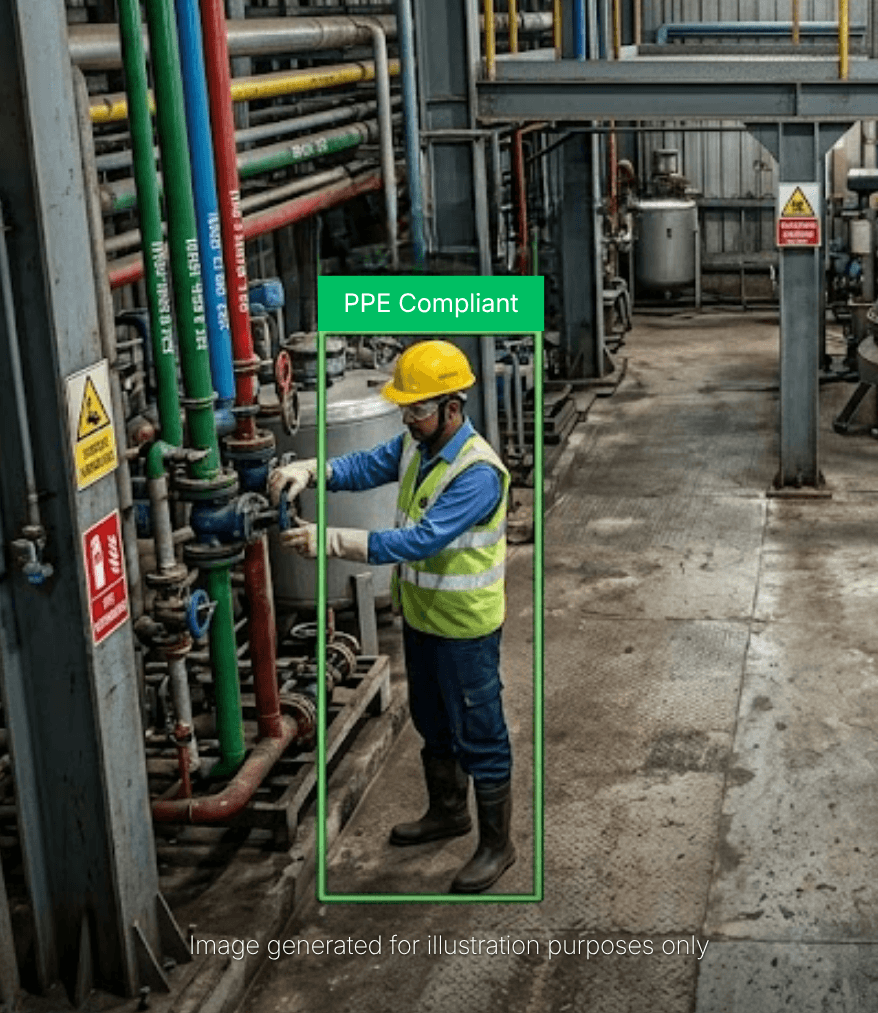
We deployed a computer vision system across site entry points and active work zones monitoring helmet and vest compliance in real time. Violations are flagged instantly and consolidated into a daily report sent automatically to the site manager.
Flow: Live site camera feed -> Helmet and vest compliance checked -> Violation flagged -> Consolidated daily report -> Sent to site manager
-
Integrated with existing CCTV infrastructure, expanded only where critical coverage gaps existed.
-
Real-time detection trained to identify missing or improper helmets, gloves, goggles, and protective suits across all shift conditions.
-
Automated email alerts sent instantly to safety supervisors and floor managers upon violation detection.
-
Centralised dashboard provides live monitoring, real-time violation flagging, and historical compliance reports for audits and shift reviews.